TRADEMARK OPPOSITION IN INDIA: PROCESS, GROUNDS, TIMELINE & HOW TO RESPOND
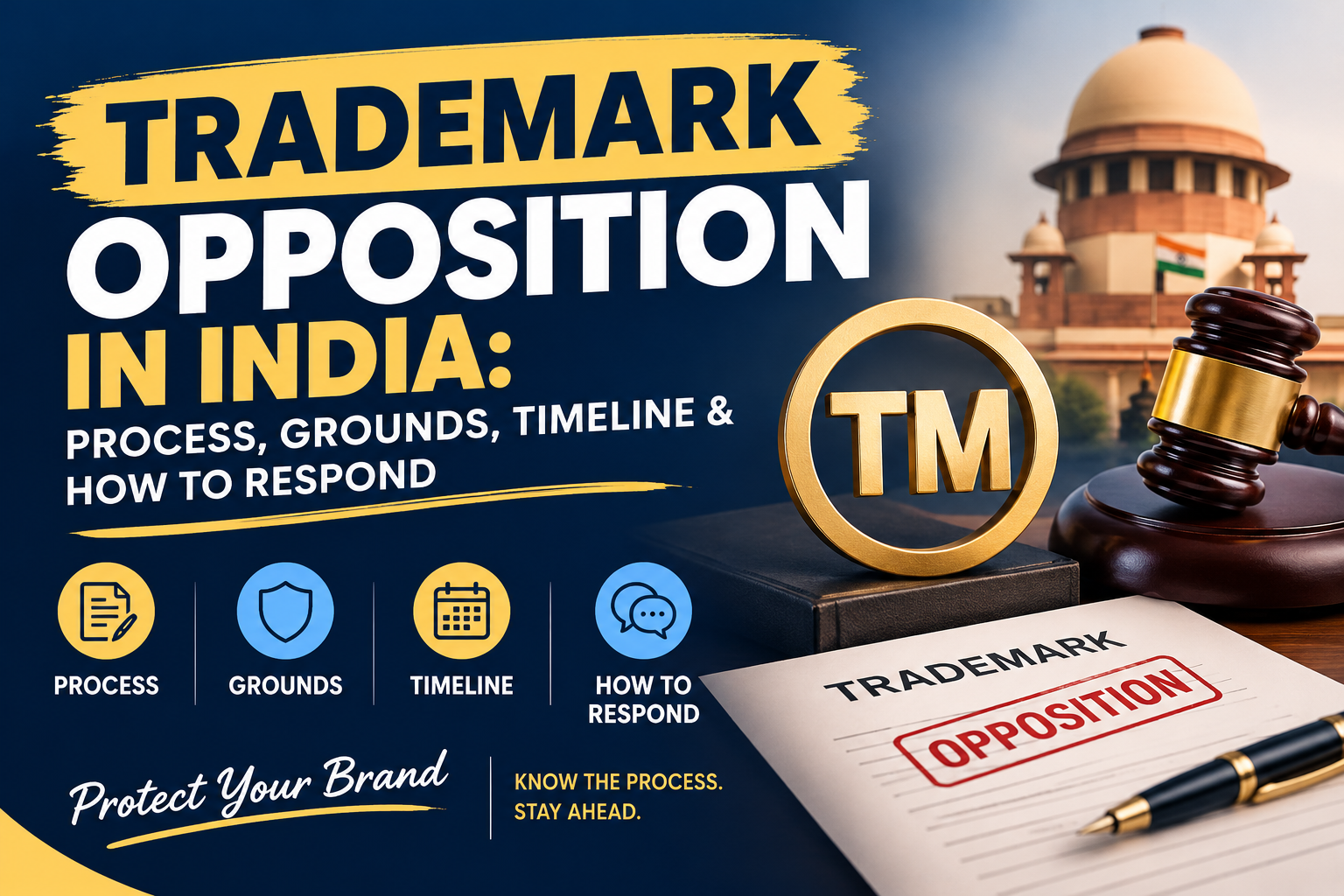
Imagine spending months building your brand, only to receive a notice saying that someone is opposing your trademark application. What should you do next? Applying for a trademark is an important step for any business. A trademark can protect a brand name, logo, tagline, symbol or other identity that helps customers recognise a business. However, filing a trademark application does not always mean that the mark will automatically get registered. After a trademark application is examined and accepted or advertised, it may be published in the Trade Marks Journal. At this stage, a third party gets an opportunity to object to its registration. This legal process is known as Trademark Opposition. Understanding trademark opposition is important for businesses because ignoring an opposition or missing the required deadline can seriously affect the trademark application.
What Is Trademark Opposition?
Trademark opposition is the process through which a person or business challenges the registration of another person’s trademark. For example, suppose a company applies to register the brand name “FreshBite” for food products. Another company has already been using a similar name for similar products. It may believe that customers could confuse the two brands. The existing business can file a trademark opposition against the new application.
When Can a Trademark Be Opposed?
A trademark is generally open to opposition after it is advertised in the Trade Marks Journal. Under the Trade Marks Act, 1999, a person may oppose the trademark within the prescribed period after its publication. This is why businesses should regularly monitor their trademark applications. Receiving an opposition does not mean that the trademark has been rejected. It means that another party has challenged the proposed registration, and the applicant gets an opportunity to defend it.
Who Can File a Trademark Opposition?
A trademark opposition is not limited only to the owner of an identical trademark. Generally, any person can file an opposition if they believe that the trademark should not be registered, subject to the requirements of trademark law.
An opponent could be:
- An existing trademark owner
- A business using a similar brand
- A company claiming prior use
- A business concerned about customer confusion
- Another person whose rights may be affected
For example, if a business has been using a particular brand name for many years but another person applies to register a confusingly similar name, the earlier user may have grounds to oppose the application.
What Are the Main Grounds for Trademark Opposition?
There can be several reasons for opposing a trademark.
1. Similarity With an Existing Trademark
One of the most common reasons is that the proposed trademark is identical or similar to an existing trademark.
The similarity may be in:
- Name
- Logo
- Spelling
- Sound
- Appearance
- Meaning
For example, if a well-established business uses “QuickKart” and another business applies for a highly similar mark for related goods or services, the existing owner may raise an opposition.
2. Likelihood of Confusion
A trademark may be opposed if customers are likely to become confused between two brands. The question is not always whether the trademarks are exactly the same. Even a similar mark can create problems if consumers may believe that the two businesses are connected.
3. Lack of Distinctiveness
A trademark should generally be capable of distinguishing one business’s goods or services from those of others. Marks that are too generic or merely describe the goods or services may face difficulties. For example, a very ordinary expression describing a product may not provide strong trademark protection.
4. Deceptive or Misleading Marks
A trademark may face opposition if it is likely to deceive or mislead consumers. For example, a mark that gives customers a false impression about the quality, nature or origin of a product may be challenged.
5. Bad Faith
An opposition may also be based on an allegation that the trademark application was made in bad faith. For example, imagine that a business has already built a reputation under a particular brand and another person knowingly applies for a similar trademark in an attempt to benefit from that reputation. Such circumstances may become relevant in opposition proceedings.
6. Conflict With Earlier Rights
An applicant may face opposition where the proposed trademark conflicts with an earlier trademark or other legally protected rights. This is why conducting a proper trademark search before filing can be extremely useful.
Trademark Objection vs Trademark Opposition
| Trademark Objection | Trademark Opposition |
| Usually raised by the Trademark Registry | Filed by a third party |
| Generally arises during examination | Generally arises after advertisement |
| Applicant responds to the Registry | Applicant responds to the opponent |
| Focuses on issues identified during examination | Challenges registration based on the opponent’s grounds |
What Is the Trademark Opposition Process?
The opposition process can involve several stages.
Step 1: Trademark Is Published
After the application reaches the appropriate stage, the trademark is advertised in the Trade Marks Journal. This gives third parties an opportunity to oppose the proposed registration.
Step 2: Notice of Opposition Is Filed
If someone believes that the trademark should not be registered, they can file a Notice of Opposition within the prescribed period. The notice explains why the opponent believes the trademark should not be registered.
Step 3: Applicant Files a Counter-Statement
The applicant then gets an opportunity to defend the trademark by filing a Counter-Statement. This is a very important stage. The applicant should carefully respond to the allegations made in the opposition and ensure that the response is filed within the prescribed timeline.
Step 4: Evidence Is Submitted
The parties may be required to submit evidence supporting their respective claims. Depending on the case, evidence may include:
- Trademark registration documents
- Invoices
- Advertising material
- Product packaging
- Sales records
- Website records
- Promotional material
- Documents showing prior use
- Evidence of reputation and goodwill
Step 5: Hearing
If the matter proceeds to a hearing, both parties may get an opportunity to present their arguments before the appropriate authority.
Step 6: Decision
After considering the pleadings, evidence and arguments, the authority decides whether the opposition should succeed or fail. Depending on the decision, the trademark may proceed towards registration or the application may not proceed.
What Should You Do If Your Trademark Is Opposed?
Do not panic, and do not ignore the notice. Receiving a trademark opposition does not automatically mean that your trademark is lost.
If you receive an opposition:
- Read the notice carefully.
- Check the deadline immediately.
- Understand why the opponent has challenged your trademark.
- Collect documents showing your use and ownership.
- Review your trademark application.
- Prepare an appropriate counter-statement.
- Submit the required evidence within the applicable timelines.
- Seek professional legal assistance where necessary.
Note- The most important thing is to take action within the prescribed time.
How Can You Reduce the Risk of Trademark Opposition?
The best way to deal with trademark opposition is to reduce the possibility of a dispute before filing. Before applying for a trademark, businesses should:
- Conduct a proper trademark search.
- Check similar names and spellings.
- Look for phonetically similar trademarks.
- Select the correct trademark class.
- Check whether the proposed mark is distinctive.
- Search for potentially conflicting existing marks.
- Maintain documents showing use of the brand.
A proper search does not guarantee that an opposition will never happen, but it can help identify possible problems before the business invests heavily in a brand.
Why Is Trademark Opposition Important for Businesses?
A brand can become one of the most valuable assets of a business. If a trademark dispute arises after a company has already spent significant money on advertising, packaging, websites and customer development, changing the brand can become expensive and difficult.
Early trademark planning can therefore help businesses avoid:
- Rebranding expenses
- Customer confusion
- Legal disputes
- Delays in trademark registration
- Loss of brand value
Frequently Asked Questions
Can anyone oppose a trademark?
Generally, any person may file a trademark opposition if they believe that the mark should not be registered, subject to the requirements of the law.
Does opposition mean that my trademark has been rejected?
No. Opposition means that a third party has challenged the registration. The applicant gets an opportunity to respond and defend the application.
Is trademark opposition the same as trademark objection?
No. A trademark objection generally comes from the Registry during examination, while an opposition is generally filed by a third party after the mark is advertised.
What happens if I ignore a trademark opposition?
Ignoring the opposition can be risky. If the applicant fails to take the required action within the prescribed period, the application may face serious consequences.
Can trademark opposition be settled?
In suitable cases, the parties may explore settlement or other mutually agreed arrangements. Whether settlement is appropriate depends on the facts and legal rights involved.
Conclusion
Trademark opposition can delay registration, but timely action can protect your brand, save legal costs, and prevent expensive rebranding. With CorpBuddy, Raipur businesses get practical support throughout the trademark process—from search and filing to opposition response—helping you secure your brand with greater confidence and focus on growing your business.
WRTTEN BY IPSHITA GHOSH (B.A.LL.B) 4th year
By entering the email address you agree to our Privacy Policy.