CHECKLIST BEFORE SELLING OR LAUNCHING ANY PRODUCT IN INDIA: A COMPLETE GUIDE FOR BUSINESSES
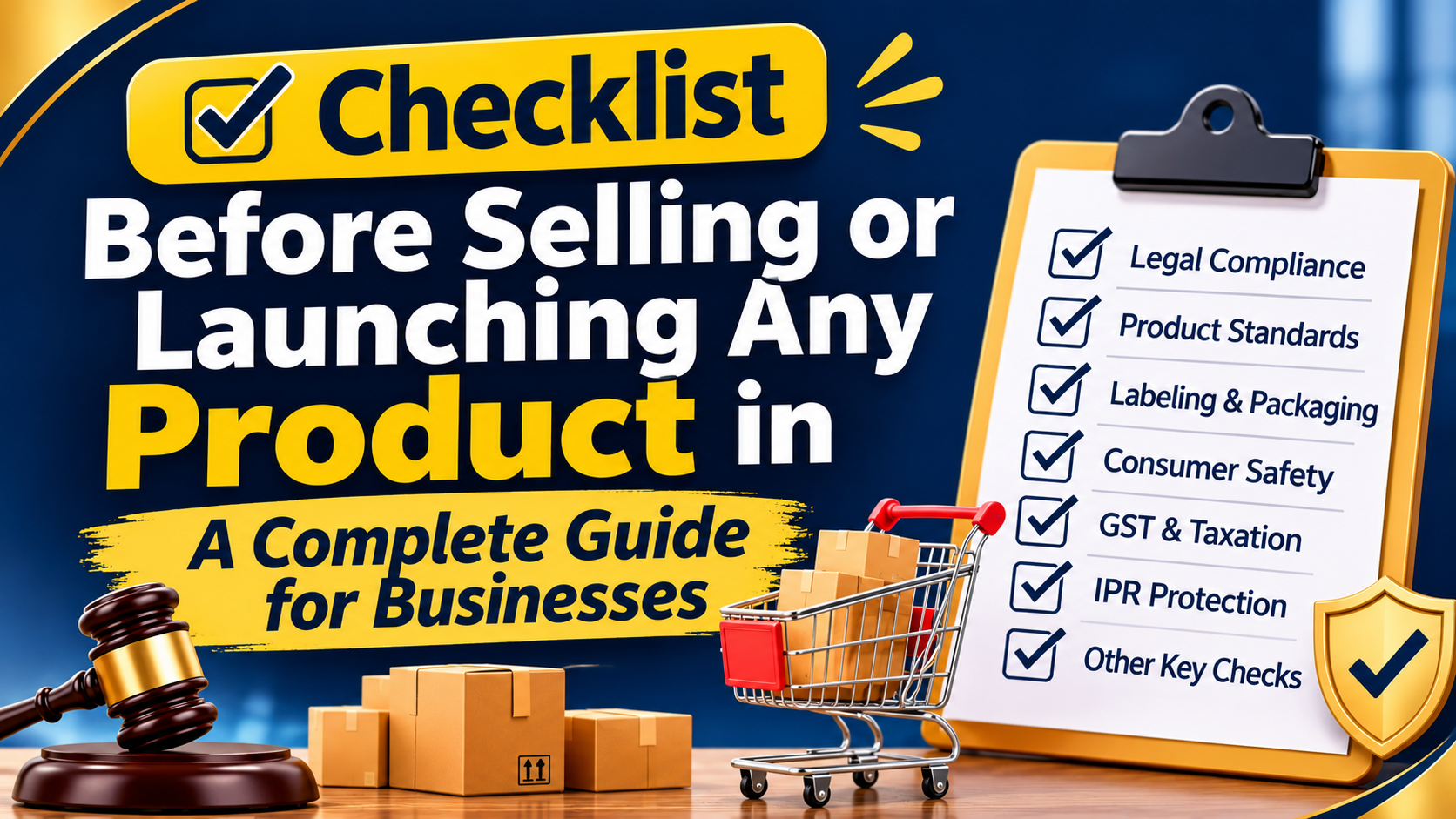
Launching a new product is exciting, but have you checked all the legal requirements? From business registration and trade licences to GST, trademarks, and product labelling, every detail matters. This simple checklist will help you prepare for a smooth launch. CorpBuddy helps businesses simplify registration, licensing, and compliance so entrepreneurs can focus on growing their business.
1. Choose the Right Business Structure
Before launching a product, decide how you will operate your business. You can choose from different business structures, such as:
- Sole Proprietorship: Suitable for many small businesses operated by one person.
- Partnership Firm: Suitable when two or more people run a business together.
- Limited Liability Partnership (LLP): Offers a separate legal structure with limited liability for partners.
- Private Limited Company: Often suitable for businesses planning to grow, raise investment or work with larger organisations.
Checklist:
- Decide your business structure.
- Complete the applicable registration formalities.
- Obtain a PAN and other required registrations.
- Open a business bank account where appropriate.
- Keep business records and ownership documents organised.
2. Check Whether Your Product Requires a Licence
Not every product requires a special licence. However, certain products can only be manufactured, imported, distributed or sold after meeting specific legal requirements.
For example:
| Product category | Possible requirement |
| Food and beverages | FSSAI registration or licence, as applicable |
| Cosmetics | Applicable manufacturing or import permissions and compliance with cosmetics rules |
| Medicines | Relevant drug licences and regulatory approvals |
| Electrical and electronic products | Applicable BIS certification or other safety requirements |
| Packaged commodities | Legal Metrology packaging and declaration requirements |
| Toys | Applicable BIS standards and certification requirements |
| Imported products | Customs, import and product-specific compliance |
Checklist:
- Identify the laws applicable to your product.
- Check whether a licence, registration or certification is required.
- Verify applicable safety and quality standards.
- Obtain the necessary approvals before starting regulated activities.
3. Register Your Brand Name and Trademark
Your product’s name, logo or brand identity helps customers recognise your business. Before investing in packaging, advertising or marketing, check whether another business is already using a similar trademark. Under the Trade Marks Act, 1999, businesses can seek trademark registration for eligible brand names, logos and other distinctive marks.
Checklist:
- Choose a distinctive brand name.
- Search existing trademarks before finalising the name.
- Check domain name and social media availability.
- Consider applying for trademark registration in the relevant class.
- Obtain permission before using another person’s logo, image or protected material.
Trademark registration is not compulsory for every product launch, but it can help protect your brand and reduce the risk of disputes.
4. Check GST and Tax Requirements
Businesses selling products should understand their tax obligations before starting sales. Goods and Services Tax (GST) registration depends on factors such as turnover, the nature of the business, the type of supply and applicable statutory exceptions. Selling through an e-commerce platform may involve additional conditions. Certain eligible small sellers of goods may use specific exemptions from mandatory GST registration, subject to prescribed conditions.
Checklist:
- Check whether GST registration is required.
- Confirm the correct HSN classification and applicable GST rate.
- Understand invoicing requirements.
- Maintain purchase and sales records.
- Check e-commerce and interstate selling requirements.
- Understand the applicable return-filing and tax-payment obligations.
Do not assume that every business must register for GST immediately or that every small online seller is automatically exempt. Verify the rules applicable to your circumstances.
5. Follow Packaging and Labelling Rules
Packaging is not only about making a product attractive. It may also have to provide legally required information. For many pre-packaged commodities sold in India, the Legal Metrology (Packaged Commodities) Rules, 2011 prescribe declarations, subject to the applicable rules and exemptions.
Depending on the product, the packaging may need to display:
- Name of the product.
- Name and address of the manufacturer, packer or importer, as applicable.
- Net quantity, weight or volume.
- Maximum Retail Price (MRP), inclusive of applicable taxes.
- Manufacturing or packing date, where required.
- Consumer care details.
- Batch or lot number, where applicable.
- Expiry date or best-before information, where required.
Note – Food, cosmetics, medicines and other regulated products may have additional labelling requirements.
Checklist:
- Review the applicable packaging rules.
- Verify all mandatory declarations.
- Check spelling, measurements and pricing.
- Confirm that the label matches the actual product.
- Avoid unsupported claims such as “100% safe” or “clinically proven.”
6. Ensure Product Quality and Safety
A product should be safe for its intended use and comply with applicable quality standards. For example, food businesses need to follow relevant food safety requirements, while certain electrical products may need to meet prescribed technical standards.
Checklist:
- Test the product where appropriate.
- Check ingredients, materials and product specifications.
- Maintain quality-control records.
- Verify that required safety standards are met.
- Keep supplier invoices and relevant certificates.
- Establish a process for handling defective products and customer complaints.
- Protect Your Intellectual Property
Before launching a product, check whether its design, content, packaging or technology uses intellectual property belonging to another person.
7. Protect Your Intellectual Property
Intellectual property protection may include:
- Trademark: Protects eligible brand identifiers.
- Copyright: Protects original creative works, such as photographs, written content and artwork.
- Patent: May protect a qualifying invention if the legal requirements are met.
- Design registration: May protect eligible product designs.
Checklist:
- Confirm ownership of your logo and product artwork.
- Obtain licences for third-party images, fonts and designs where required.
- Review agreements with designers and manufacturers.
- Check whether your product or packaging may infringe existing rights.
- Consider registering eligible intellectual property.
8. Prepare Legal Documents and Business Agreements
Businesses often work with manufacturers, distributors, suppliers, retailers and delivery partners. Clear written agreements can help prevent disputes. Important documents may include:
- Supplier or manufacturing agreement.
- Distributor or dealership agreement.
- Purchase order and supply terms.
- Confidentiality agreement, where appropriate.
- Website terms and conditions.
- Return, refund and cancellation policy.
- Privacy policy, where applicable.
- Warranty and after-sales service terms.
Note- If you sell directly to consumers online, your website and sales process may also need to comply with applicable consumer protection and e-commerce rules.
Checklist:
- Clearly mention prices, payment terms and delivery timelines.
- Define responsibility for defective or damaged products.
- Set out warranty and return conditions.
- Explain how customers can contact your business.
- Review consumer protection and data protection obligations
9. Check E-Commerce and Online Selling Rules
If you plan to sell through your own website or marketplaces such as Amazon or Flipkart, review the requirements that apply to your selling model. Online sellers should pay attention to product descriptions, pricing, customer information, grievance handling and refund terms.
Checklist:
- Provide accurate product descriptions and photographs.
- Display applicable product declarations.
- Avoid misleading discounts and advertisements.
- Publish relevant return, refund and shipping policies.
- Provide required seller and grievance contact details.
- Review marketplace-specific documentation and category restrictions.
- Protect customers’ personal information.
10. Review Advertising and Marketing Claims
Marketing can help a product reach more customers, but advertisements must not mislead consumers. The Consumer Protection Act, 2019 and the applicable rules regulate misleading advertisements and unfair trade practices. For example, a business should not claim that a product is government-approved, medically proven, organic or environmentally friendly unless the claim is accurate and adequately supported.
Checklist:
- Verify all claims used in advertisements.
- Keep evidence supporting performance claims.
- Obtain consent before using customer testimonials where required.
- Disclose material conditions and limitations.
- Check influencer and paid-promotion disclosure requirements, where applicable.
- Avoid false comparisons with competitors.
Honest advertising helps build customer trust and reduces legal risk.
11. Check Environmental and Waste Management Requirements
Some products create additional obligations relating to packaging, plastic waste, electronic waste or batteries. Depending on the product and your role in the supply chain, you may need to assess applicable Extended Producer Responsibility (EPR) requirements or other environmental rules.
Checklist:
- Identify the packaging materials used.
- Check whether plastic packaging rules apply.
- Review e-waste or battery waste requirements, where relevant.
- Determine whether registration or reporting is required.
- Maintain the necessary compliance records.
These requirements are product- and business-specific, so verify them before launching.
12. Obtain a Trade Licence
A trade licence may be required from the relevant municipal authority, depending on your business activity and local rules. It helps ensure that your business operates in accordance with applicable local regulations.
Checklist:
- Check whether your business requires a trade licence.
- Identify the relevant municipal authority.
- Prepare the required documents.
- Apply for the trade licence and pay the applicable fee.
- Renew the licence when required.
Your document folder may include:
- Business registration documents.
- PAN and GST registration details, where applicable.
- Product licences and certificates.
- Trademark application or registration details.
- Packaging and label artwork.
- Product testing reports.
- Supplier and manufacturing agreements.
- Invoices and purchase records.
- Advertising claim evidence.
- Customer complaint and warranty records.
- Trade Licences
Keeping these documents organised makes it easier to respond to marketplace requests, inspections, customer complaints and business expansion needs.
Final Product Launch Checklist
- Business structure and required registrations checked.
- Product-specific licences and approvals obtained.
- Brand name and trademark availability checked.
- GST and tax requirements reviewed.
- Packaging and labelling verified.
- Product quality and safety requirements met.
- Intellectual property rights reviewed.
- Supplier and manufacturing agreements prepared.
- Website and e-commerce requirements checked.
- Advertising claims verified.
- Environmental obligations assessed.
- Invoices and compliance documents organised.
Conclusion
Planning to launch a new product? Before starting, ensure your business meets all applicable legal requirements, including business registration, GST compliance, trademark protection, product licences, packaging and labelling rules. Proper documentation and compliance can help you avoid legal issues and build customer trust. CorpBuddy, Raipur helps businesses with registration, trademark, GST, company law and other compliance requirements, making it easier for entrepreneurs to focus on growing their business. Contact CorpBuddy, Raipur for professional assistance with your business compliance needs before launching your product.
Frequently Asked Questions (FAQs)
1. Is a licence required to sell every product in India?
No. The requirement depends on the product, business activity and applicable law. Some products require special licences or certifications, while others may not.
2. Is GST registration compulsory before launching a product?
Not in every case. GST registration depends on turnover, the type of supply, the selling model and applicable statutory conditions and exemptions.
3. Should I register my trademark before launching a product?
Trademark registration is not mandatory for every launch, but checking the brand name and considering registration before investing in marketing can help reduce disputes.
4. What details must appear on product packaging?
The required declarations depend on the product and applicable rules. Pre-packaged commodities may require details such as net quantity, MRP and manufacturer or importer information, while regulated products may need additional declarations.
5. What should I do before selling a product online?
Check applicable registrations, product licences, tax obligations, packaging requirements, consumer protection rules, marketplace policies and advertising claims before starting sales.
WRITTEN BY IPSHITA GHOSH (B.A.LL.B) (4TH YEAR)
By entering the email address you agree to our Privacy Policy.