57TH GST COUNCIL MEETING 2026: KEY DECISIONS EVERY BUSINESS OWNER SHOULD KNOW
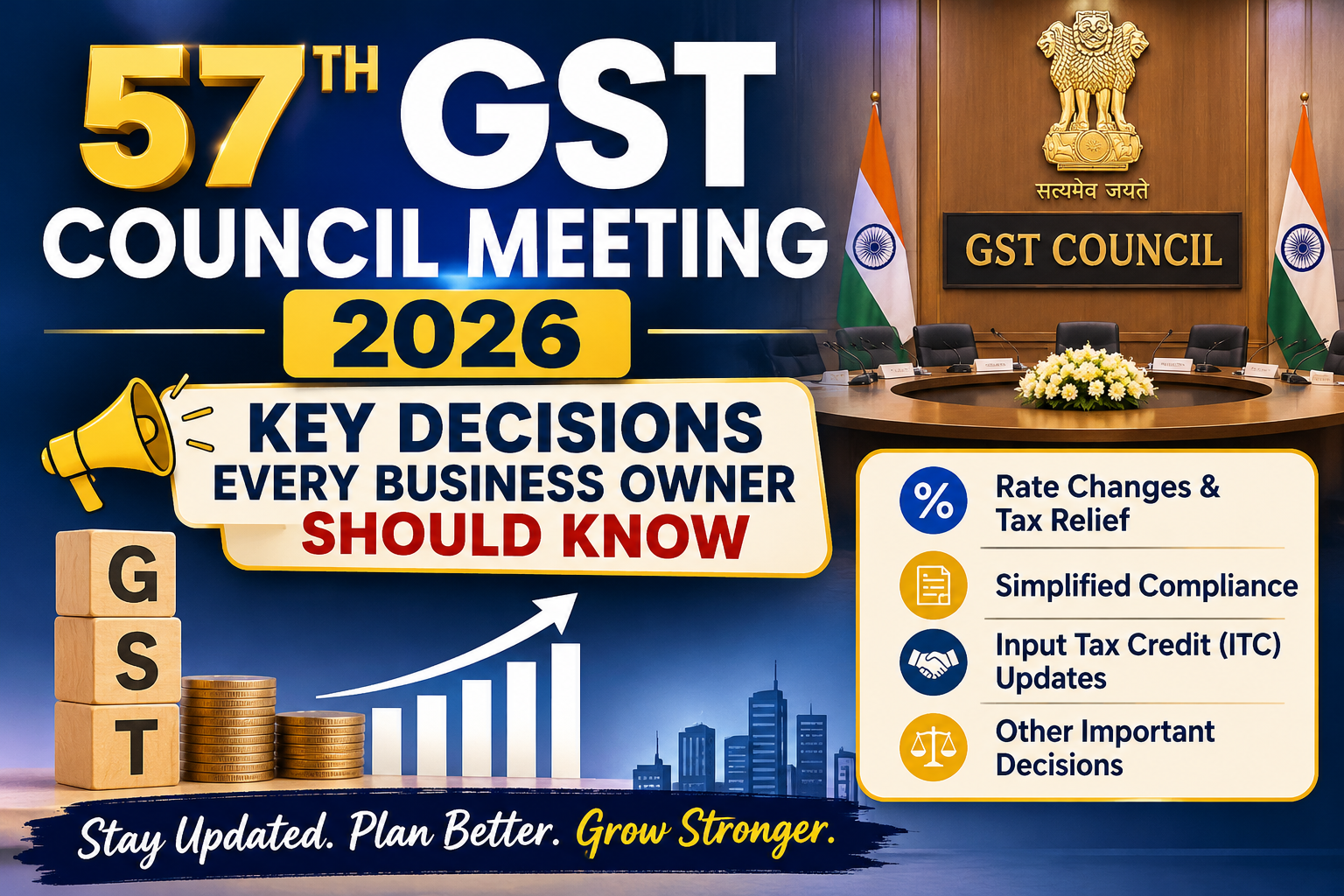
GST is an important part of running a business in India. Every business owner needs to understand GST registration, tax payments, refunds and filing rules to avoid unnecessary problems. The 57th GST Council Meeting discussed several changes to make GST compliance easier for businesses and taxpayers. The main focus was on reducing paperwork, speeding up refunds, making registration clearer and reducing unnecessary legal disputes. Interestingly, the meeting did not recommend any changes to GST rates. Instead, it focused mainly on improving the way the GST system works. In this blog, we explain the major recommendations of the 57th GST Council Meeting in simple words and discuss how they may affect businesses.
What Is the GST Council?
The GST Council is a body that makes recommendations about GST in India. It includes the Union Finance Minister and representatives of the state governments. The Council discusses matters such as GST rates, tax exemptions, registration, returns and other tax-related issues. Its main purpose is to help create a common GST system across India.
Major Decisions of the 57th GST Council Meeting
1. No Change in GST Rates
The Council did not recommend any GST rate changes at this meeting. It also proposed that decisions on GST rates should generally be taken once a year. Any approved changes would then be introduced from the beginning of the following financial year.
What does this mean for businesses?
Businesses may get more time to prepare for changes in tax rates. It could also make financial planning, product pricing and tax calculations easier. However, businesses should continue applying the GST rates currently in force until an official change takes effect.
2. Easier GST Registration
GST registration is the process through which an eligible business registers under GST and receives a GST Identification Number (GSTIN). The Council discussed making registration requirements clearer, especially the documents that applicants need to submit. It was also reported that around 61% of taxpayers currently receive automatic registration within three working days.
How will this help?
Clearer document requirements can help business owners prepare their applications correctly. Faster registration can also help eligible businesses begin their operations without unnecessary delays. Before applying, businesses should check the latest document requirements and registration rules.
3. Faster GST Refunds
Sometimes, businesses pay more GST than they need to or become eligible for a refund under GST rules. Delays in receiving this money can affect their daily business activities. The Council proposed reducing the time for acknowledging refund applications from 15 days to 10 days.
Why is this important?
A shorter acknowledgement period can help businesses receive an update on their applications sooner. Faster refund processing can also improve cash flow and help businesses manage expenses. An acknowledgement does not necessarily mean that the refund has been approved. The application must still satisfy the applicable conditions.
4. Refunds Under the Inverted Duty Structure
An inverted duty structure occurs when a business pays a higher GST rate on its purchases than the GST rate charged on its sales. This can result in unused Input Tax Credit (ITC). The Council proposed allowing refunds of accumulated ITC relating to input services under the inverted duty structure from 1 November 2026.
Example:
Suppose a manufacturer pays GST on services used in its business but charges a lower GST rate on the goods it sells. The manufacturer may accumulate unused ITC. If the proposed change takes effect and the manufacturer meets the conditions, it may be able to claim a refund of eligible credit relating to those services.
How will this help?
The change could reduce the amount of money businesses have locked up in unused tax credit and help them manage their working capital.
5. Fewer GST Notices for Small Tax Amounts
Receiving a GST notice can take time and money, even when the amount involved is small. The Council proposed that GST notices should not be issued for tax amounts below ₹10,000. It also proposed withdrawing existing pending notices that fall below this limit.
How will this help businesses?
- Businesses may face fewer disputes over small tax amounts.
- Taxpayers could spend less time responding to minor cases.
- Tax authorities may be able to focus more on larger and more important matters.
This proposal does not mean that businesses can ignore GST payments or filing requirements. The final rules will determine which cases qualify for this relief.
6. New Rules for Inspecting Goods Moving Between States
Goods often travel between states for sale, delivery or business purposes. Unnecessary checks during transportation can delay deliveries and increase costs. The Council proposed limiting inspection, detention and seizure of goods to officers of the supplier state or destination state. It also proposed that interception should require specific information suggesting a problem and authorisation from an officer at Joint Commissioner level.
How will this help?
- Goods may move more smoothly between states.
- Businesses could face fewer unnecessary transport delays.
- Transporters may find it easier to plan deliveries.
- The proposed safeguards could reduce avoidable disputes during the movement of goods.
Note– Businesses must still carry the required invoices, e-way bills and other documents wherever applicable.
7. Changes to GST Arrest and Prosecution Rules
GST law contains provisions dealing with serious offences, including certain cases of tax evasion and fraud. The Council recommended removing arrest powers under GST and increasing the prosecution threshold from ₹1 crore to ₹5 crore.
What does this mean?
The recommendation aims to reduce the risk of criminal proceedings in cases covered by the proposed changes. Raising the prosecution threshold could also mean that prosecution under the relevant provisions would generally apply only when the specified tax amount crosses the revised limit, subject to the final law and applicable exceptions. These recommendations should not be treated as an immediate removal of existing legal powers. The required legal amendments must first take effect.
8. Faceless Assessment for Central GST
A faceless assessment system allows tax matters to be handled electronically, reducing the need for direct, in-person interaction between taxpayers and tax officials. The Central Government plans to introduce a faceless assessment system for Central GST, drawing on the approach used in income-tax assessments. A proposed framework is expected to be released for public consultation before Budget 2027, with implementation planned for the 2027–28 financial year.
Why does this matter?
A faceless system could make the assessment process more transparent and convenient. Businesses may be able to submit documents and respond to queries online, depending on the final system. It could also reduce the need for physical visits to tax offices. However, the exact procedure will depend on the framework finally adopted by the government.
9. More Clarity on Export of Services
Businesses in India sometimes provide services to foreign customers through overseas branches or carry out work on goods belonging to foreign clients. The Council discussed clarifying when these activities can qualify as exports of services under GST.
The recommendations included:
- Services provided by an Indian company to a foreign client through its overseas branch may qualify for export benefits, subject to the applicable conditions.
- Testing, repair, certification and research carried out in India for foreign clients may also qualify as exports of services in specified cases, even when the goods remain in India.
How will this help?
These clarifications could help businesses understand whether their services qualify for export treatment. This is particularly relevant for companies providing technical, research, repair and certification services to overseas customers.
The export status of a transaction depends on the applicable GST provisions and the facts of the particular case.
How Will These GST Recommendations Affect Businesses?
The recommendations may bring several practical benefits if implemented.
- Small businesses: Clearer registration requirements and relief from certain minor disputes could reduce compliance difficulties.
- Manufacturers: Eligible businesses may benefit from refunds of accumulated ITC under the inverted duty structure.
- Exporters: Greater clarity on export-of-service rules could help businesses plan international transactions.
- Transport businesses: Proposed restrictions on unnecessary interception could support smoother movement of goods.
- Start-ups and new businesses: Faster registration may help eligible applicants complete the registration process sooner.
- Taxpayers generally: A faceless assessment system could make certain tax procedures more convenient.
What Should Businesses Do Next?
Business owners should take a few simple steps to stay prepared:
- Check the GST rates applicable to their products and services.
- Keep invoices, purchase records and sales records properly organised.
- Review their Input Tax Credit and refund eligibility.
- Ensure that GST returns and payments are completed on time.
- Keep the required transport documents ready when moving goods.
- Follow official GST notifications to understand when new provisions become effective.
- Seek professional advice if a recommendation affects their existing tax position.
Frequently Asked Questions (FAQs)
1. Did the 57th GST Council Meeting change GST rates?
No. According to the recommendations outlined above, no GST rate changes were made at the meeting.
2. What is the proposed new timeline for GST refund acknowledgements?
The Council proposed reducing the acknowledgement period from 15 days to 10 days. This does not mean every refund will be approved within 10 days.
3. What is an inverted duty structure?
It occurs when the GST rate on a business’s purchases is higher than the rate on its sales, which can result in accumulated unused Input Tax Credit.
4. Will businesses stop receiving GST notices for amounts below ₹10,000?
The Council proposed a threshold below which notices would not be issued, along with the withdrawal of certain pending notices. The final legal provisions will determine how the relief applies.
5. What is faceless GST assessment?
It is a proposed electronic assessment system intended to reduce the need for direct interaction with tax officials.
6. When will the proposed changes become applicable?
Different recommendations may have different implementation dates. Businesses should check the relevant official notifications, circulars and amendments before relying on any change.
Conclusion
Need help with GST registration, GST notices, returns, refunds or other GST-related matters? CorpBuddy, Raipur can help you understand your GST requirements and manage your business compliance with professional support. Connect with CorpBuddy, Raipur to make GST compliance simpler and hassle-free.
WRITTEN BY IPSHITA GHOSH (B.A.LL.B) 4TH YEAR
By entering the email address you agree to our Privacy Policy.