CAN A COMPANY DIRECTOR BE PERSONALLY LIABLE FOR COMPANY DEBTS IN INDIA?
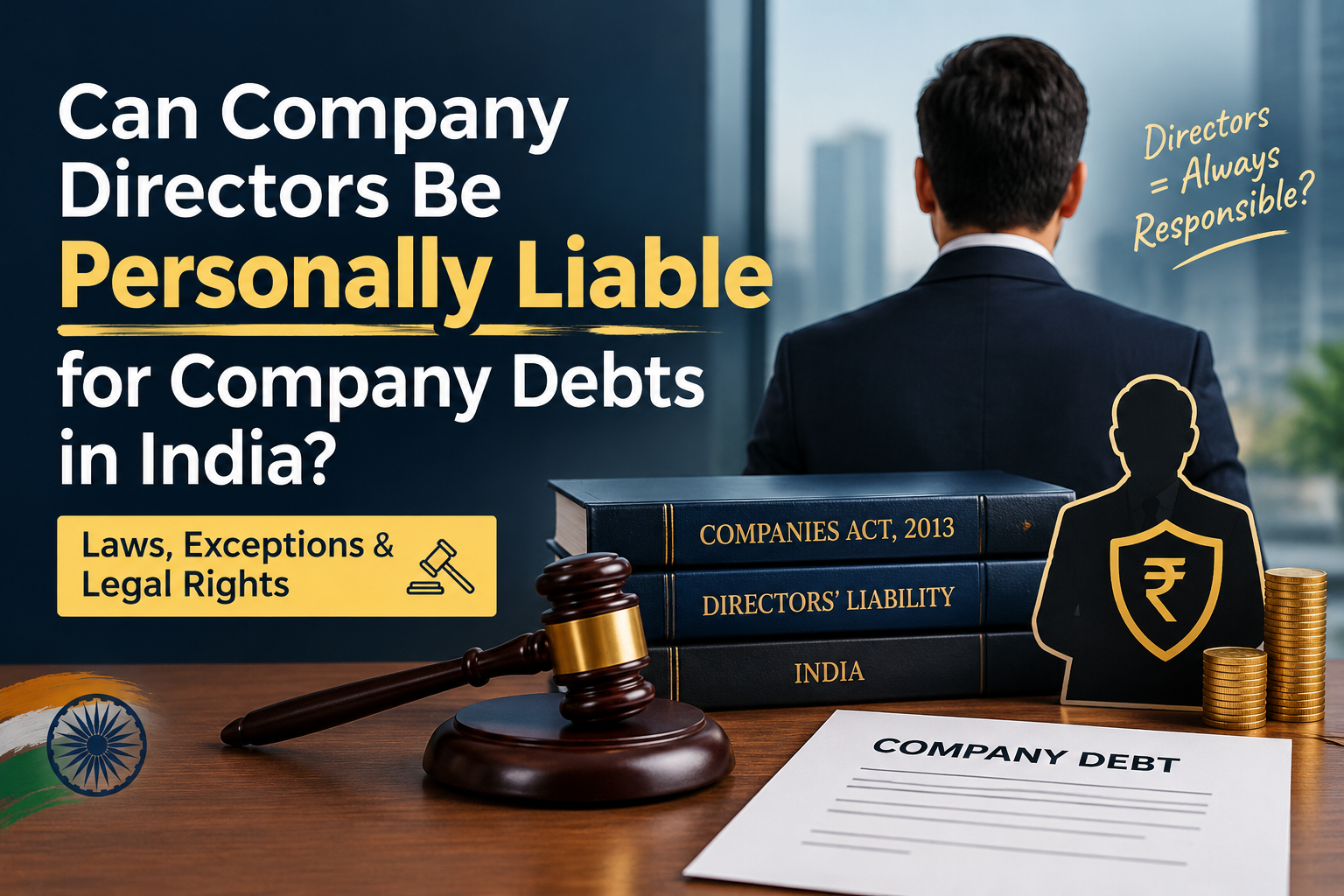
Imagine Your company takes a business loan of ₹50 lakh, but due to unexpecteses, it fails to repay the bank. Can the bank seize your personal property, savings or other assets just because you are a director? The answer is not always! In India, a company has a separate legal identity, which generally protects its directors from personal liability for company debts. However, this protection is not absolute. A personal guarantee, fraud, misuse of company funds or certain statutory defaults can put a director’s personal assets and finances at risk. So, when does the law protect a director, and when can a director be held personally responsible? Let’s understand the legal position under Indian law in simple words.
What Is the General Rule Under Indian Law?
Under the Companies Act, 2013, a company has a separate legal identity. It can own property, enter into contracts, borrow money and sue or be sued in its own name. Therefore, directors are not automatically responsible for repaying every loan or debt taken by the company.
Example: Suppose ABC Private Limited borrows ₹10 lakh from a bank but suffers losses and cannot repay the loan. Generally, the company is responsible for repayment. Its directors do not have to pay the debt from their personal savings merely because they manage the company. However, this protection is not absolute. Personal liability may arise in specific circumstances.
When Can a Director Be Personally Liable?
A. When the Director Gives a Personal Guarantee
One of the most common situations is when a director provides a personal guarantee to a bank or another lender. A personal guarantee is a promise by the director to repay the debt if the company fails to do so. Example: A company borrows ₹20 lakh from a bank, and its director signs a personal guarantee. If the company defaults, the bank may proceed against the director according to the guarantee’s terms and applicable law.In such cases, the director’s personal assets may be at risk.
B. When the Director Commits Fraud
A director cannot use the company as a shield to escape liability for fraud or dishonest conduct. If a director deliberately misrepresents financial information, deceives creditors or obtains loans through fraudulent means, personal liability may arise under the applicable laws. For example, if a director knowingly submits false documents to obtain a business loan, the director may face civil or criminal consequences, depending on the facts.
C. When the Director Misuses Company Funds
Company funds must be used for legitimate business purposes. A director who diverts company money for personal benefit or dishonestly transfers assets to avoid paying creditors may face legal action. Depending on the circumstances, such conduct may lead to recovery proceedings, penalties or other legal consequences.
D. When the Director Fails to Comply With Legal Duties
Directors have duties under Section 166 of the Companies Act, 2013. These include acting in good faith, exercising reasonable care and avoiding situations involving improper personal gain. If a director breaches these duties and causes loss, personal liability may arise where the law permits it. However, an ordinary business mistake or a company’s financial loss does not automatically make a director personally liable for all outstanding debts.
E. When the Company Is Wound Up or Enters Insolvency Proceedings
When a company cannot pay its creditors, insolvency or winding-up proceedings may follow. Under the Insolvency and Bankruptcy Code, 2016, directors may face consequences for fraudulent conduct, wrongful trading where applicable, or other violations of the law. For example, transferring company assets to relatives to keep them away from creditors may invite legal scrutiny. The exact liability depends on the facts and the relevant statutory provisions.
F. When Statutory Laws Specifically Impose Liability
Certain laws may impose personal liability on directors or other responsible officers in specific circumstances. For example, Section 179 of the Income-tax Act, 1961, provides a mechanism for recovering certain tax dues of a private company from its directors, subject to statutory conditions and applicable defences. Similarly, particular provisions of tax, labour and other regulatory laws may impose liability on responsible officers for specified defaults. Therefore, directors should not assume that limited liability protects them against every statutory obligation.
Does Every Director Have the Same Liability?
No. Liability depends on the director’s role, conduct, legal obligations and involvement in the transaction. An executive director who actively manages the company’s financial affairs may have different responsibilities from an independent or non-executive director. However, the title alone does not determine liability. Courts and authorities may examine the director’s actual role, knowledge, conduct and the applicable law. A director who was not involved in a particular default may have relevant legal defences, depending on the circumstances.
How Can Directors Protect Themselves?
Directors can reduce legal risks by following these practical steps:
- Read loan documents carefully: Understand whether a personal guarantee is required before signing.
- Maintain proper records: Keep accurate financial statements, accounts and statutory registers.
- Avoid mixing personal and company funds: Maintain separate bank accounts and financial records.
- Follow legal requirements: Ensure timely tax payments, statutory filings and other applicable compliances.
- Act honestly: Avoid fraudulent transactions, misleading statements and improper transfers of assets.
- Seek legal advice: Consult a qualified professional before signing guarantees or making decisions during financial distress.
Conclusion
CorpBuddy, Raipur helps businesses manage company law and compliance requirements, including company registration, ROC filings and statutory documentation. Our compliance support helps businesses understand their legal obligations, reduce avoidable errors and operate confidently. Connect with CorpBuddy, Raipur today for reliable corporate compliance assistance and focus on growing your business without unnecessary compliance worries.
WRITTEN BY IPSHITA GHOSH (B.A.LL.B) 4TH YEAR
By entering the email address you agree to our Privacy Policy.