AGM DUE 30 SEPT 2026: AGM & ROC COMPLIANCE GUIDE FOR RAIPUR COMPANIES
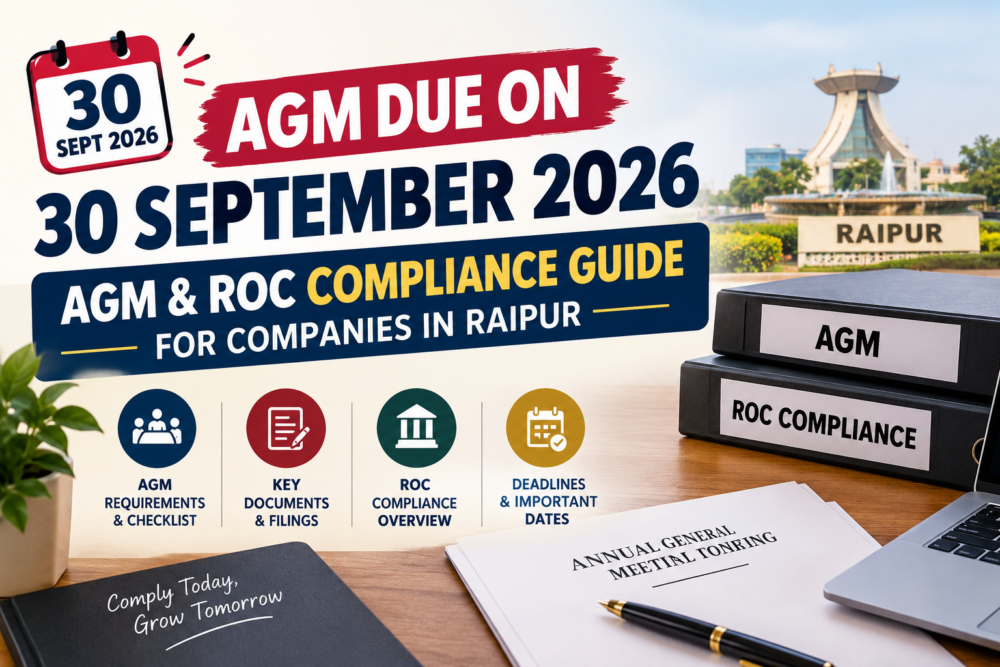
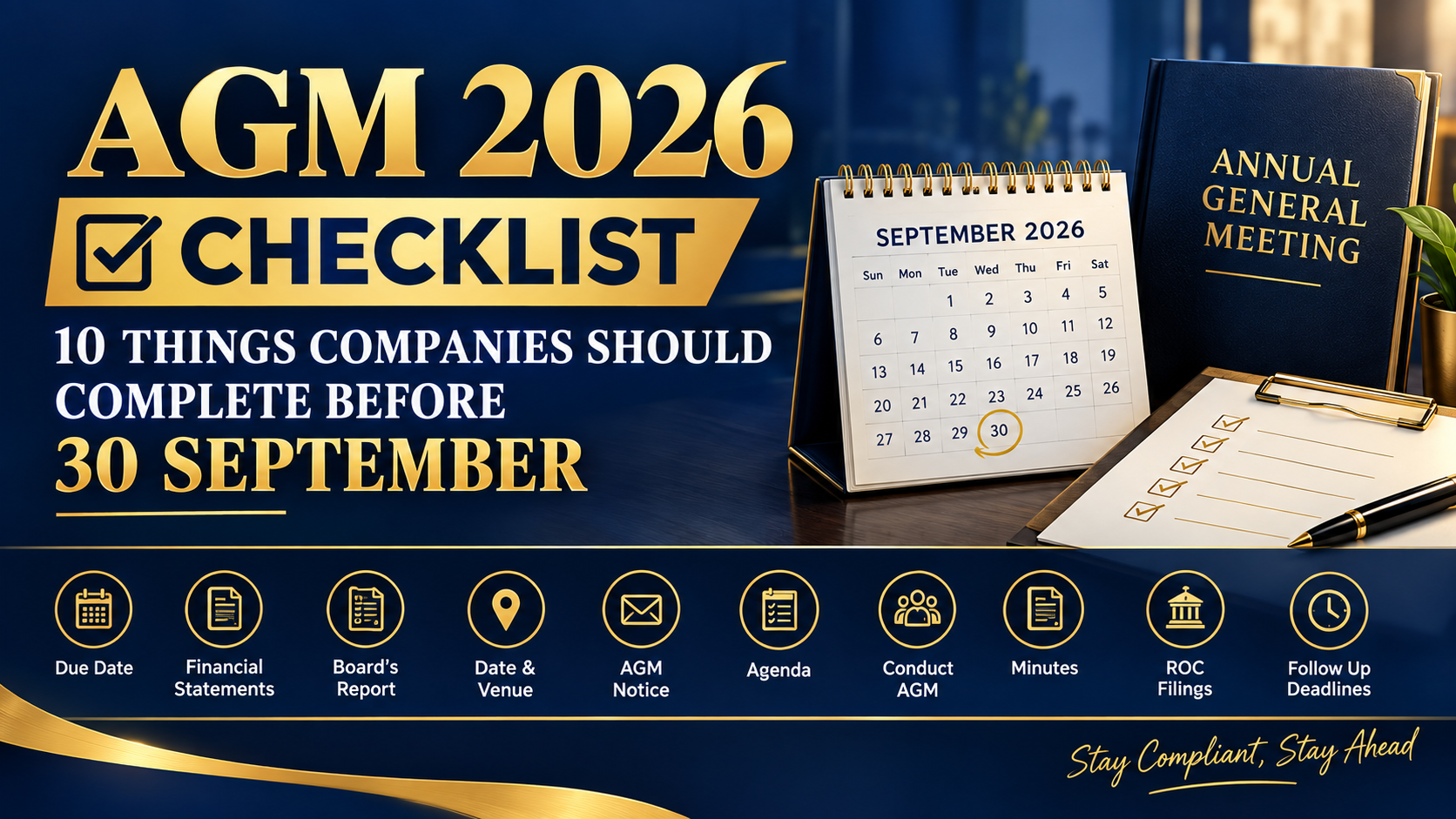
If your company’s financial year ended on 31 March 2026, it’s time to get your Annual General Meeting (AGM) on the calendar! For many companies, the AGM is generally required to be held within six months from the end of the financial year, making 30 September 2026 an important compliance deadline. But AGM compliance is more than just conducting a meeting. Companies may need to prepare financial statements, the Board’s Report, AGM notice, resolutions and other documents, followed by applicable ROC filings after the AGM. Waiting until the last minute can lead to unnecessary stress, delays and compliance issues. Start preparing now, conduct your AGM on time and keep your company compliance on track!
What Is an AGM?
AGM stands for Annual General Meeting. It is the yearly meeting of a company’s members or shareholders where important company matters are discussed and, when required, approved. In simple words, AGM is a company’s official yearly meeting with its members. It allows members to review the company’s financial performance, reports and other important matters. Depending on the company, the AGM may also cover directors, auditors, dividends and financial statements.
Why Is 30 September 2026 Important?
Under the Companies Act, 2013, an AGM is generally required within six months from the end of the financial year. For a company whose financial year ended on 31 March 2026, the AGM will generally be due by 30 September 2026. However, the exact requirement may vary depending on the company’s type and applicable circumstances.
Which Companies Need to Conduct an AGM?
- Public Companies – Generally required to conduct an AGM every year.
- Private Companies – Generally required to hold an AGM, subject to applicable exemptions.
- Listed Companies – Must follow AGM and additional securities-law requirements.
- One Person Companies (OPCs) – Follow specific provisions and are generally exempt from holding an AGM.
- Other Eligible Companies – Requirements may vary depending on their legal structure and applicable rules.
What Should Be Prepared Before the AGM?
An AGM involves more preparation than simply selecting a date. Before the meeting, the company should review and arrange the documents and information required for the AGM.
Important preparations may include:
- Preparation of financial statements
- Board’s Report
- Auditor’s Report, wherever applicable
- AGM notice
- Agenda for the meeting
- Required resolutions
- Attendance-related records
- Supporting documents
- Information relating to directors and auditors
- Other documents required under applicable law
NOTE The company should also determine the appropriate date, time and venue/manner of conducting the AGM and ensure that the required notice is issued within the prescribed period.
What Is an AGM Notice?
The AGM notice is an important document through which members are informed about the meeting.
It generally contains important information such as:
- Date of the AGM
- Time of the AGM
- Venue or applicable mode of meeting
- Business to be considered
- Details of proposed resolutions
- Explanatory information, wherever required
- Other prescribed information
What Happens During the AGM?
During the AGM, the company considers the matters included in the notice. Depending on the company and its agenda, these may include:
- Financial Statements- Members may consider the company’s financial statements for the relevant financial year.
- Board’s Report- The Board’s Report and other applicable reports may be placed before the members.
- Auditor-Related Matters- Where applicable, matters relating to the company’s auditor may be considered.
- Dividend- If the company proposes a dividend, the relevant matter may be placed before the members in accordance with applicable law.
- Directors’ Matters- Certain matters relating to directors may also be considered or approved, depending on the company’s circumstances.
- Other Business- Any other business properly included in the AGM notice may also be taken up.The proceedings of the meeting should also be properly recorded.
What Happens After the AGM?
Post-AGM ROC Filings & Their Deadlines. The work does not stop once the AGM is over. After the meeting, the company must complete its applicable ROC filings within the prescribed time.
- AOC-4 – Financial Statements
- Filed for the company’s financial statements and related documents.
- Deadline: Within 30 days of the AGM.
- If the AGM is held on 30 September 2026, the filing is generally due by 30 October 2026.
- MGT-7 – Annual Return
- Filed for the company’s annual return and corporate details.
- Deadline: Within 60 days of the AGM.
- For an AGM on 30 September 2026, the general deadline would be 29 November 2026.
- MGT-7A – OPCs & Small Companies
- Used by eligible OPCs and small companies, as applicable.
- Deadline: Generally within 60 days of the AGM, where an AGM is applicable.
- ADT-1 – Auditor Details
- Where applicable, the company files details of the auditor appointed or re-appointed at the AGM.
- Deadline: Generally within 15 days of the AGM.
AGM vs Annual ROC Filing: What’s the Difference?
| Basis | AGM | Annual ROC Filing |
| Meaning | Annual General Meeting of the company’s members/shareholders | Submission of required company documents to the ROC |
| Purpose | To discuss and approve important matters of the company | To meet the company’s annual statutory filing requirements |
| Who is involved? | Members/shareholders, directors and other required participants | Company and the Registrar of Companies (ROC) |
| What happens? | Financial statements and other applicable matters are discussed | Forms and supporting documents are filed electronically |
| Common compliance | Conducting the AGM within the prescribed time | Filing forms such as AOC-4, MGT-7 or MGT-7A, as applicable |
| Deadline | Generally within the time prescribed under the Companies Act | Filing deadlines apply after the AGM, depending on the form |
| Simple meaning | Meeting of Members | Compliance Filing with ROC |
What Happens If AGM Compliance Is Delayed?
Missing or delaying statutory compliance can result in unnecessary complications. Depending on the nature of the default, applicable provisions may provide for additional fees, penalties or other consequences.
More importantly, delayed compliance can create problems when a company later needs:
- Bank finance
- Investment
- Government registrations
- Due diligence
- Corporate restructuring
- Business expansion
- Regulatory documentation
NOTE- A company with properly maintained statutory records is generally better prepared for these situations.
Why Should Companies Start AGM Preparation Early?
September may seem like there is still plenty of time, but AGM compliance involves multiple steps. For example:
Financial statements prepared
↓
Board and statutory documents reviewed
↓
AGM notice prepared
↓
Notice issued within the required period
↓
AGM conducted
↓
Minutes and records maintained
↓
Applicable ROC filings completed
NOTE– If one step is delayed, the next steps may also be affected.
CONCLUSION
An AGM is more than a yearly meeting—it is an important part of corporate compliance. With 30 September 2026 approaching, companies should prepare early and complete their annual requirements on time. CorpBuddy Raipur can assist with AGM and annual ROC compliance, helping businesses stay organised and avoid last-minute compliance pressure.
WRITTEN BY IPSHITA GHOSH BA LLB 7TH SEMESTER
By entering the email address you agree to our Privacy Policy.