
CAN YOU LEGALLY OPERATE TWO DIFFERENT BUSINESSES UNDER ONE COMPANY IN INDIA?
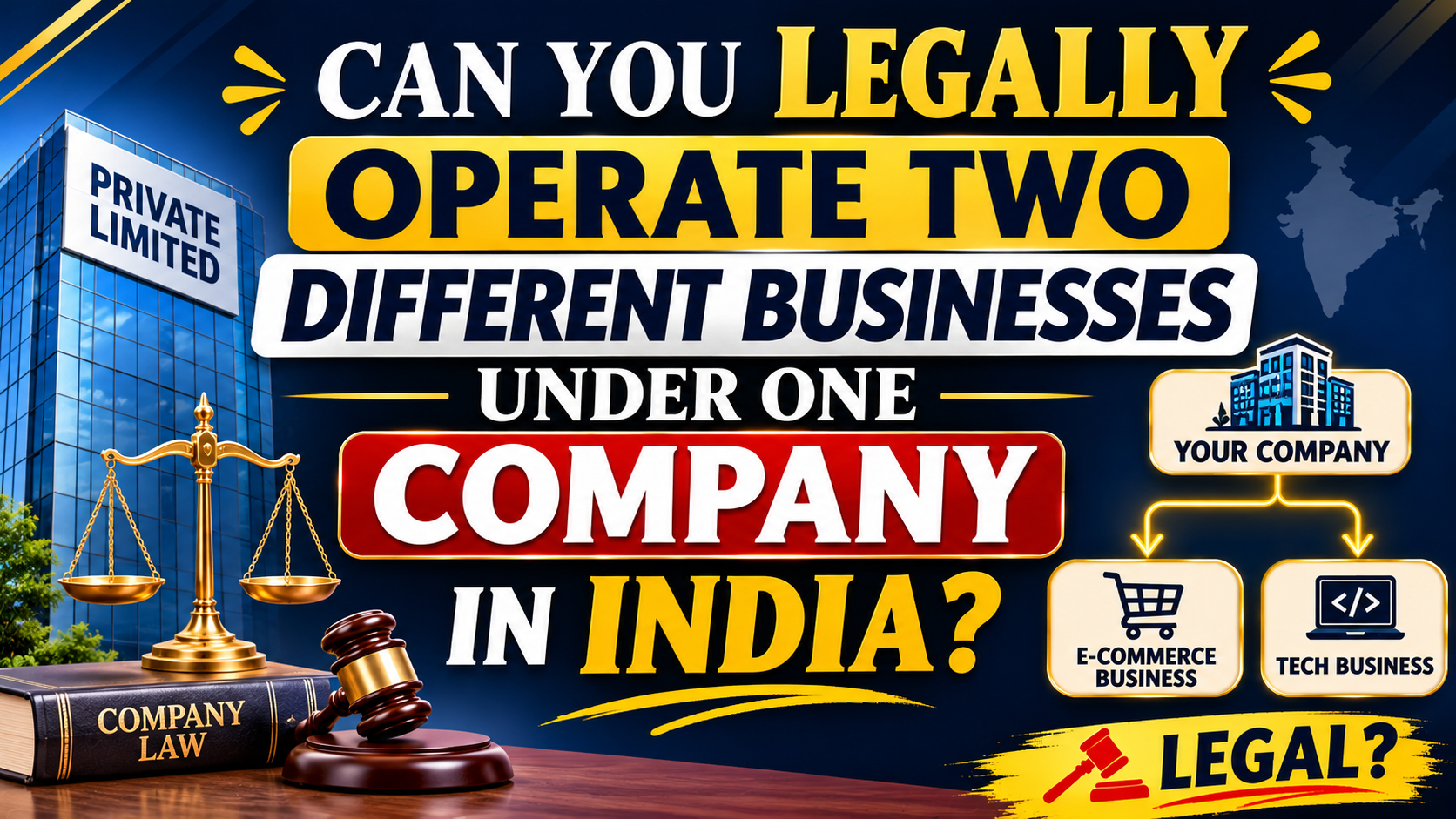
Imagine you own a clothing business and now want to start a restaurant or an online shopping business. Do you need to register a new company, or can you run both businesses under your existing company? The good news is that one company can legally operate multiple businesses in India, provided it follows the required legal rules and regulations. Let’s understand how!
Can One Company Run Multiple Businesses?
Yes! One registered company can run different businesses under the same legal name. You do not always need to register a new company to start another business. For example, ABC Enterprises Private Limited can operate a clothing store, a restaurant and a digital marketing agency under one company. However, all business activities must be legally permitted and follow the required rules and regulations. In simple words, one company can manage multiple businesses without creating a separate company for each one!
What Does the Companies Act, 2013 Say?
The Companies Act, 2013 provides the legal framework for companies operating in India. Under Section 4(1)(c), the company’s Memorandum of Association (MOA) must state the objects for which the company is incorporated and matters considered necessary in furtherance of those objects. This means that a company must clearly define its business objectives in its MOA. For example, if a company is registered for manufacturing clothes and selling fashion accessories, it must check whether its existing objects cover a proposed new restaurant business. If the new activity is not covered, the company may need to alter its MOA under Section 13 of the Companies Act, 2013, by following the prescribed procedure. Therefore, before starting another business, checking the company’s MOA is essential.
What is the Role of the Memorandum of Association (MOA)
The Memorandum of Association is one of the most important legal documents of a company. It explains the company’s objectives and the activities it is established to undertake. Think of the MOA as a legal framework that defines the company’s permitted business activities.
For example, suppose XYZ Private Limited has the following objectives:
- Manufacturing and selling clothes.
- Selling fashion accessories.
- Operating an online shopping platform.
Now, the company decides to start selling footwear. If the existing objects already cover this activity, an alteration may not be necessary. However, if the company wants to enter a completely different industry, it must check whether the existing objects permit that activity. If an alteration is required, the company must complete the applicable legal formalities, including passing the necessary special resolution and filing the prescribed documents with the Registrar of Companies.
Does Every Business Need a Separate GST Number?
A company does not always need a separate GST number for every business. For example, if ABC Enterprises Private Limited runs a clothing store and a restaurant in Raipur, both may operate under the same GST registration, if the legal requirements are fulfilled. However, if the company operates in different states, it generally needs separate GST registrations in each state where registration is required. Therefore, running multiple businesses or using different brand names does not automatically mean you need separate GST numbers.
Can One Company Operate Different Brand Names?
Yes. A company can operate different brands under the same registered legal identity.
For example, Reliance Industries limited may operate:
- JIO- Mobile/internet
- Reliance Fresh/JioMart – Grocery
- Reliance Jewels – Jewellery .
Customers may recognise these businesses by their individual brand names, but legally, all three may belong to the same company. However, it is important to understand that a brand name and a registered company name are different. The company is the legal entity, whereas the brand name helps customers identify a particular product or service. Business owners should also consider trademark registration under the Trade Marks Act, 1999, to protect their brand identity.
Licences and Legal Permissions for Different Businesses
Having one company registration does not mean that the company can operate every type of business without additional permissions. Different industries have different licensing and compliance requirements. For example, a restaurant may require FSSAI registration or a licence, depending on the nature and scale of its operations. A pharmaceutical business requires appropriate drug licences. A manufacturing business may require factory-related approvals and environmental permissions. Similarly, an online business must follow applicable consumer protection, e-commerce and GST requirements. This means that even if two businesses operate under one company, each activity must comply with the laws applicable to its industry.
How Does It Work?
When one company runs multiple businesses, the income and expenses of all businesses are generally recorded under the same company. For example, if a clothing business earns ₹15 lakh and a restaurant earns ₹10 lakh, the company’s total income will be ₹25 lakh. After deducting ₹15 lakh in eligible expenses, its profit before other tax adjustments will be ₹10 lakh. The company pays tax according to applicable income-tax rules. However, maintaining separate records for each business helps track profits, expenses and overall performance.
Advantages of Operating Multiple Businesses Under One Company
1. Saves Time: You do not need to register a new company every time you start another permitted business.
2. Reduces Costs: You can save certain company registration and administrative expenses.
3. Shared Resources: You can use the same office, employees, technology and other facilities for different businesses.
4. Easy Management: Managing multiple business activities under one company can make administration easier.
5. Business Expansion: You can explore different industries and new market opportunities without creating a separate company every time.
Risks and Disadvantages of Running Multiple Businesses Under One Company
1. Financial Risk: If one business suffers losses, the company’s overall assets may be exposed to legitimate creditor claims.
2. Complicated Accounting: Managing the income, expenses and records of different businesses can become difficult.
3. Different Legal Requirements: Each business may require separate licences, registrations and legal approvals.
4. Reputation Risk: A problem or controversy in one business may negatively affect the reputation of the company’s other brands.
5. Difficulty in Selling: Selling one business independently can become complicated because it does not have a separate legal identity.
When Should You Create a Separate Company?
Running multiple businesses under one company is not always the best choice. Sometimes, creating separate companies can make things easier and safer. For example, if you are running a clothing business and now want to start a pharmaceutical business, it may be better to create a separate company because both businesses have different rules, risks and responsibilities. Similarly, if you want different investors for each business or plan to sell one business in the future, having separate companies can be helpful. Therefore, before starting another business, think about your future plans, financial risks and legal responsibilities.
Important Legal Checklist Before Starting Another Business
1. Check the MOA: Make sure the new business activity is covered by your company’s Memorandum of Association.
2. Update Company Documents: If the new activity is not covered, complete the required legal procedure to change the MOA.
3. Check GST Requirements: Understand whether your existing GST registration is sufficient or another registration is required.
4. Obtain Necessary Licences: Get the licences and permissions required for the new business.
5. Maintain Proper Accounts: Keep clear records of the income, expenses and profits of each business.
6. Follow Legal Rules: Comply with applicable tax, labour and other business laws.
7. Check Existing Agreements: Review your loan agreements, business contracts and investor agreements for any restrictions.
8. Take Professional Advice: Consult a Chartered Accountant, Company Secretary or corporate lawyer before expanding your business.
Frequently Asked Questions (FAQs)
Q1. Can one private limited company operate two different businesses in India?
Yes. A private limited company can operate multiple businesses if the activities are covered by its MOA and all applicable legal requirements are fulfilled.
Q2. Do I need to register a new company to start a second business?
No. You can operate another business under your existing company if the proposed activity is legally permitted and the necessary licences and registrations are obtained.
Q3. Can one company have two different brand names?
Yes. One company can operate multiple brands under the same legal identity. Trademark registration can help protect those brand names.
Q4. Can one company operate a restaurant and a clothing business together?
Yes. It is legally possible, provided the company’s objects cover both activities and the required licences and approvals are obtained.
Q5. What happens if one business suffers losses?
The losses affect the financial position of the same company. Since both businesses belong to one legal entity, its assets may be available to satisfy legitimate creditor claims.
Conclusion
Operating multiple businesses under one company can create exciting growth opportunities, but every expansion requires the right legal and financial planning. From company registration and MOA amendments to GST, licensing, and corporate compliance, CorpBuddy, Raipur helps businesses navigate every important step with confidence. Partner with CorpBuddy, Raipur to build, manage, and grow your business with the right compliance support. Contact CorpBuddy, today!
WRITTEN BY IPSHITA GHOSH (B.A.LL.B) (7TH SEMESTER)
By entering the email address you agree to our Privacy Policy.